
Last Soldier Killed in Civil War Was Hoosier
Photos courtesy Andy Chandler
Portland, Indiana. May 2025.
Ask most people when the Civil War ended; they’ll tell you it was when General Lee surrendered to General Grant at Appomattox on April 9, 1865. History buffs like an effect as great as the cause, complete with brave men. The last of the chivalry ends with two gentlemen meeting in a parlor. However, the Civil War didn’t end with a dramatic crescendo and curtain call of important characters. It ended in a somewhat gradual and often confusing way.
Appomattox wasn’t the largest surrender. That would happen a few weeks later outside of Durham, North Carolina, when General Joseph E. Johnston surrendered 89,000 soldiers to William T. Sherman.
Still, that wasn’t the end. There are two candidates for the last battle: Palmetto Ranch on the U.S. / Mexico Border, fought on May 13 and Hobdy’s Bridge in Alabama fought May 19. For the sake of discussion, I’ll say it was Palmetto Ranch since that battle involved a known chain of command with orders given and received. The Confederates won that battle, meaning that the Civil War opened and closed on Confederate victories.
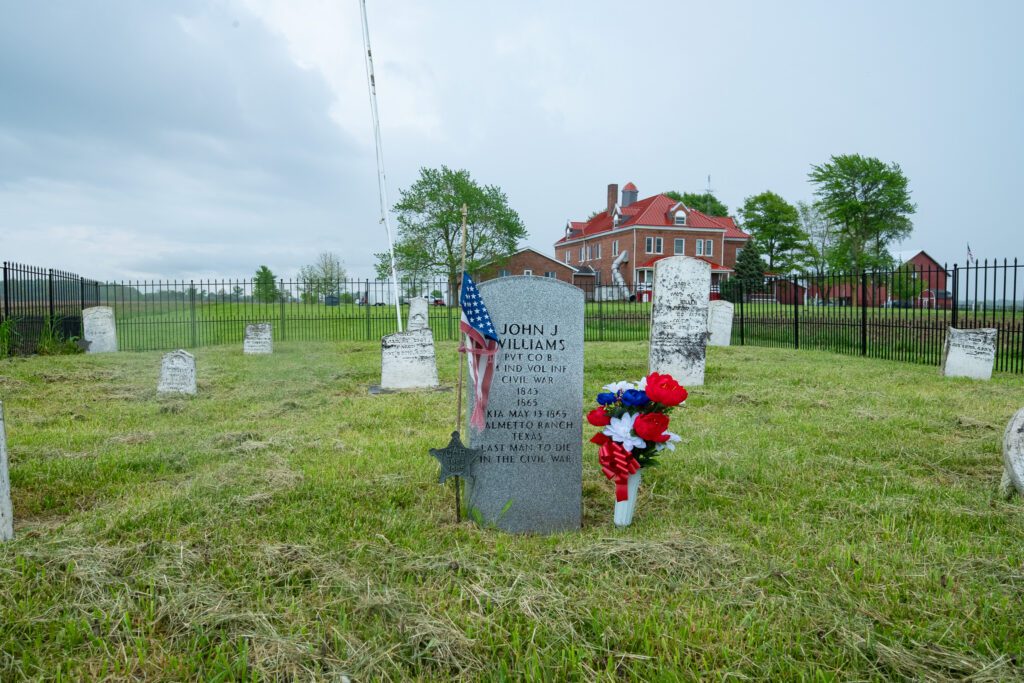
Last year was the 160 anniversary of the end of the Civil War. I’m big for dates and making sure that these dates are remembered. However, I’m sure that most people didn’t realize that Palmetto Ranch occurred or that the last soldier killed in battle was a Hoosier, Private John J. Williams
There is scant information on him, but here’s what we know: he was born and raised in Jay County. In the fall of 1863, he enlisted and was assigned to Company B of the 34th Indiana Infantry Volunteer Regiment. Originally sent to New Orleans for occupation at the end of the war, he was later sent to Brazo’s Santiago in Texas to secure the port near Brownsville.
It was near there on May 13, 1865, that Colonel Theodore Barrett attempted to take Fort Brown on the Rio Grande and make a name for himself. Reminiscent of the end of WWI, this action wasn’t necessary. He took the fort, but it was during the counterattack a few hours later, that Pvt. Williams was killed. The Civil War’s last battle casualty.
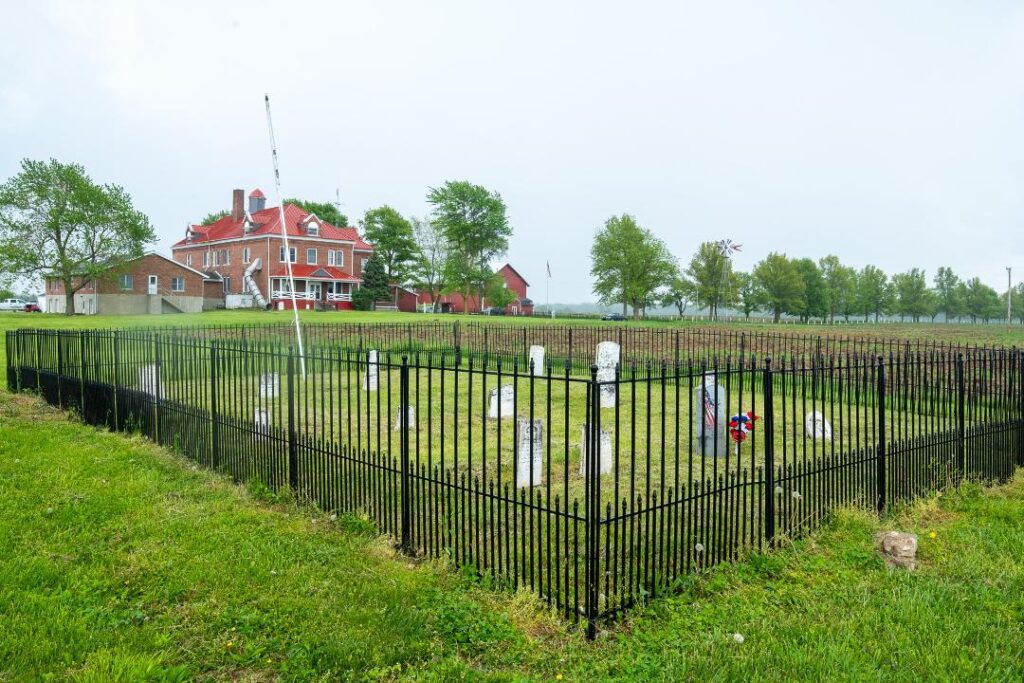
He was originally buried in New Orleans, but reinterred back in the Hoosier state, just north of Portland in the Jay County Farm Cemetery. What used to be the asylum is now a retirement home, and in the back is the cemetery.
I’ve been to multiple wreath laying ceremonies. William Henry Harrison’s in North Bend, Abraham Lincoln’s in Springfield and Ernie Pyle’s in Dana. Why not a wreath laying to this significant soldier who fought for the Union? Even if it was a one-person ceremony attended by me.
It was storming that day, and I spent an hour in a nearby Walmart getting out of the rain. I couldn’t find a wreath, so I just settled on a small flower arrangement (artificial).
Then came a lull. I drove to the cemetery. The rain and lightning picked up again. Getting impatient; I tore out of my car, ran to the cemetery at a full sprint. His grave is obvious. I planted the arrangement in the ground, took a few photos, saluted, and ran back to my car.
The gesture was hardly symbolic, but I’d like to think it was reverent. There’s no reason to forget these men.