
Andy Takes Us Back for International Nurses Day
Photos courtesy Andy Chandler
At the time of this publishing, tomorrow, May 12th is International Nurses Day.
Working in the archives at a museum dedicated to a reporter who documented people’s daily lives, it’s easier to discuss a specific government program, time, or issue through the eyes of someone who experienced it.
Most people come to museums expecting to see a collection of artifacts. Among the many time period pieces, are items that make the visitor pause and reflect. In many ways, a museum is a collection of biographies.
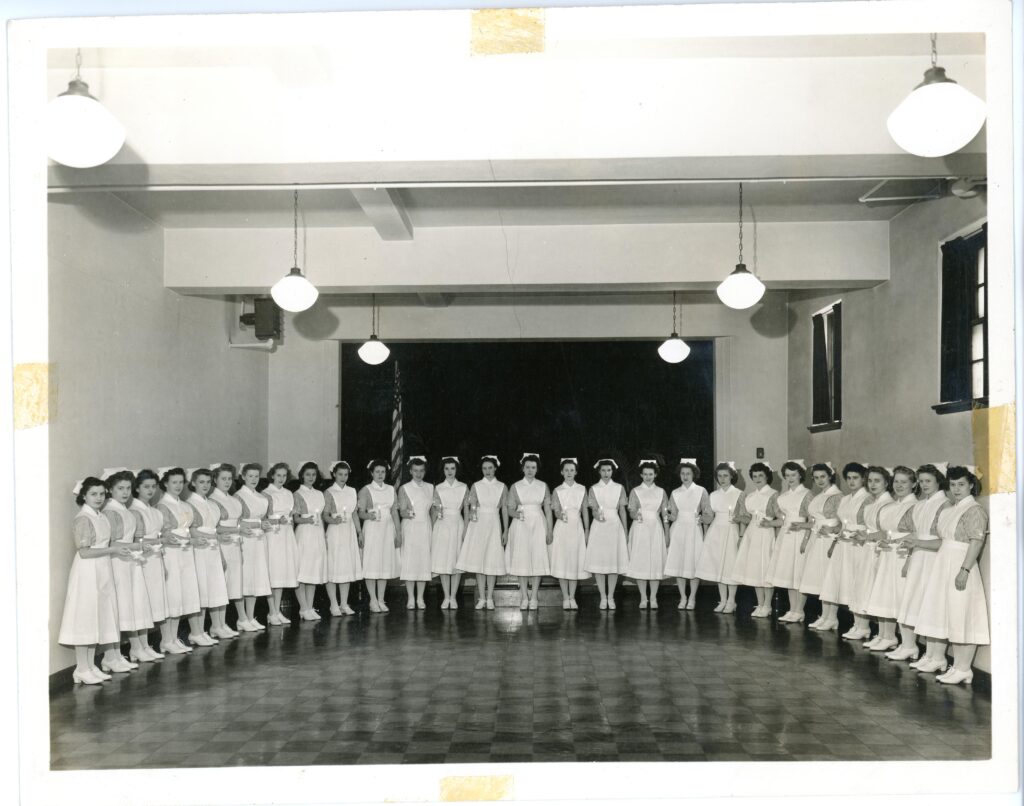
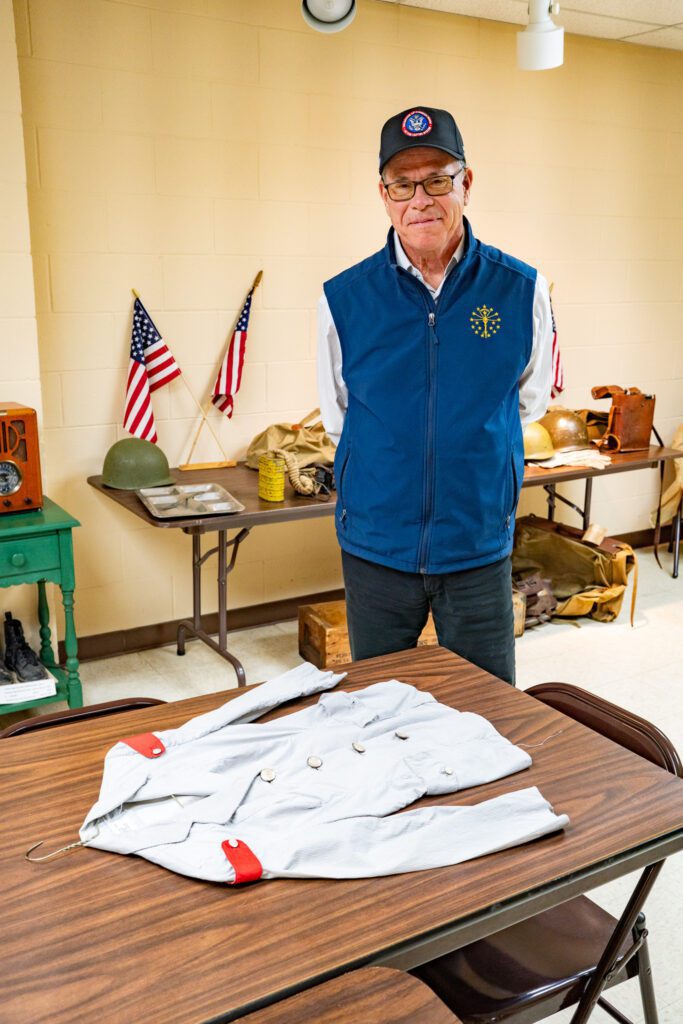
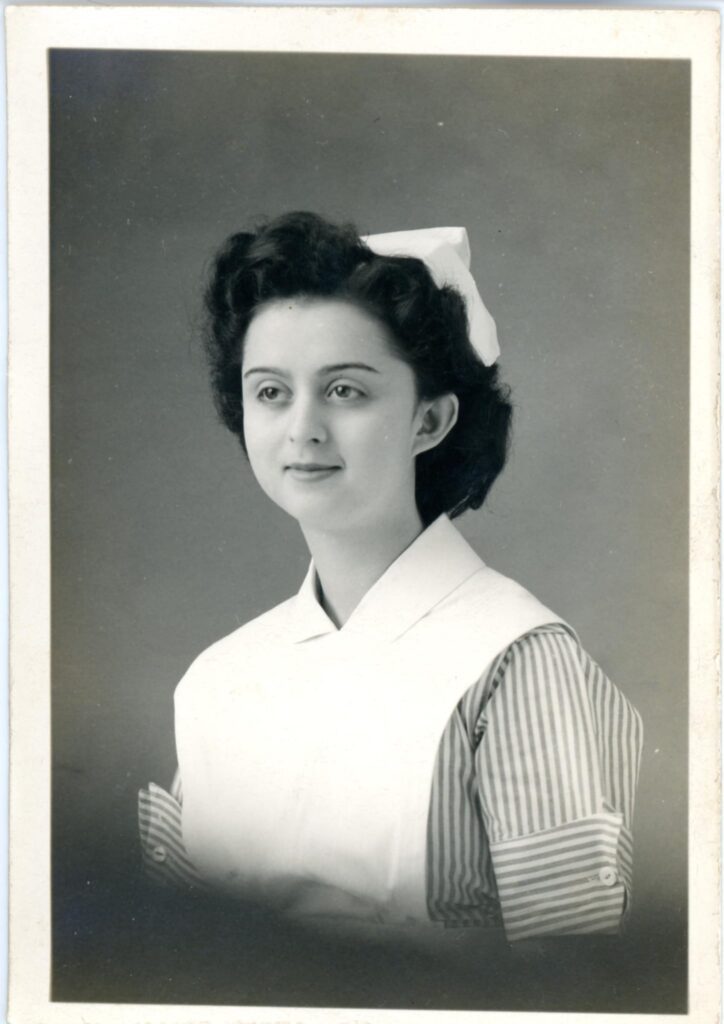
At the Ernie Pyle WWII Museum in Dana, the archives have one such biography: a 1944 Cadet Nurse Corp (CNC) blouse donated on behalf of Ms. Betty Williams, one of the first women to participate in a government program to train nurses during World War II (WWII).
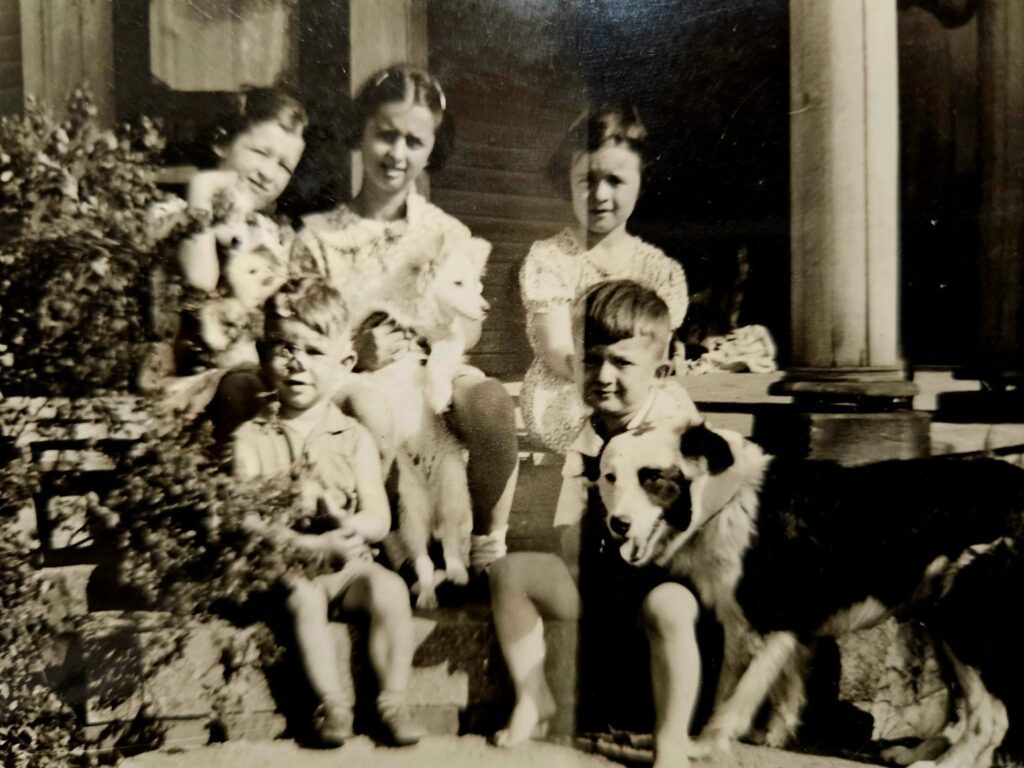
Betty Lou Williams was born in Indianapolis in 1926. During her infancy, her family moved to a farm in Odon, IN, a town west of what is now Crane Naval Center. She spent her childhood in school, helping with farm chores and raising her dog, Spitz. She graduated from Odon-Madison High School in 1944.
It’s hard to fathom that during the US involvement in WWII the American war effort, the US went from 100,000 people in uniform, to over sixteen million. During the five years of CNC’s existence, more nurses were pinned than there were military service members prior to 1941.
We can learn a lot about Betty as a person based on the CNC requirements. Candidates were to be between 17-35 years of age, of good moral character, fit and have good grades.
Motivations varied, but in many interviews later conducted by Case Western University, women in the program cited that the chance to wear a uniform, free college, free tuition room and board, a chance to make more than being an office clerk and a desire to help people, as main motivators.
One feature of Ohio Senator Frances Bolton’s 1943 Nurse Training Senate Bill was the prohibition against racial discrimination. CNC was five years ahead of the formal armed forces’ integration. While numbers are not fully known, Case Western University, in the same study, estimated four thousand minorities were pinned over five years.
Betty was trained through Union Hospital’s program in Terre Haute under the watchful eye of Bessie Small. The collection of ID cards and photographs from that time have been a godsent to archivists. She completed the program with top grades.
Eventually, she went on to a career in rural medicine starting in Oden and then went to work at IU Medical for cancer research and treatment. She married and had a family. It was her daughter Lisa Hall, who donated the artifacts to the Pyle Museum where eventually they will be on display by this summer.
Recently, during a visit to the Ernie Pyle WWII Museum by Governor Mike Braun, Ms. William’s nurses’ blouse was put out on display. Even Gov. Braun didn’t realize Union Hospital had such a program. When I asked how her mother might feel with the Governor learning about her, Lisa stated,” my mother would be so proud, and probably a little embarrassed.”
As a post-script to this article: in researching this program I discovered that in December of 2025, a federal law was signed designating nurses who served in the CNC during 1943-1948 and discharged honorably, to be considered active duty military and eligible for VA benefits including the famous white gravestone, and burial in Arlington.